What is Cupping?
Cupping therapy is an ancient healing technique that some people use to ease pain. A provider places cups on your back, stomach, arms, legs or other parts of your body. A vacuum or suction force inside the cup pulls your skin upward.
Cupping therapy is a form of traditional medicine that originated in China and West Asia. People have practiced this method for thousands of years.
Other names for cupping therapy include cupping, cup therapy and suction cup therapy.
Suction rapidly facilitates rigid soft tissue release, loosens & lifts connective tissue, breaks up and drains stagnation while increasing blood & lymph flow to skin & muscles in ways that may be more difficult using compression.
Cupping can also engage the parasympathetic nervous system, thus allowing a deep relaxation to move through the entire body. It is not unusual to fall asleep when receiving this treatment.
Frequently Asked Questions about Cupping
Cupping uses suction to draw blood to or away from specific areas of your body. People mostly use cupping to relieve conditions that cause pain. Some report that it also helps with chronic (ongoing) health issues. Cupping may ease symptoms of:
- Back pain, neck pain, knee pain and shoulder pain.
- Arthritis, including rheumatoid arthritis.
- Asthma and other breathing issues.
- Carpal tunnel syndrome.
- Gastrointestinal (GI) disorders like irritable bowel disease (IBD).
- Headaches and migraines.
- High blood pressure (hypertension).
I always check with patients before beginning cupping that they are OK with the resulting marks left within the targeted areas.
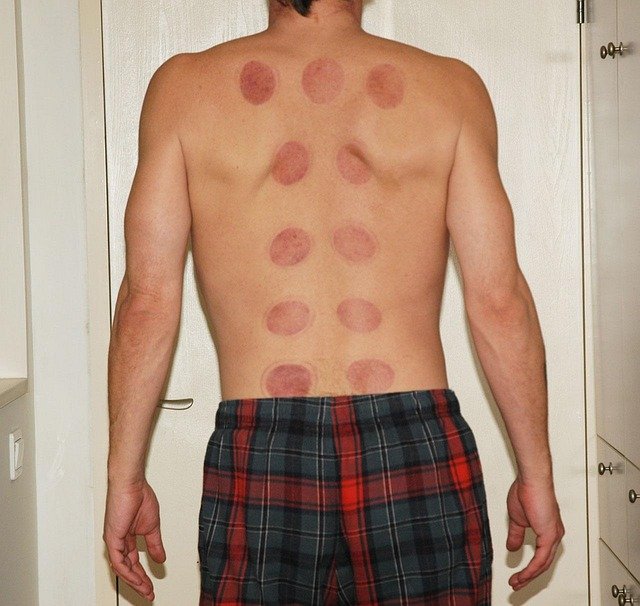
The suction force from cupping breaks open tiny blood vessels called capillaries under your skin. You’ll have red, round cupping therapy marks that should fade within several days to a week or two. Although these marks will look like bruises, they’re not true bruises that injure muscle fibers. The time it takes the marks to fade depends on the intensity and length of the treatment and the patient’s body type.
Experts are still exploring how cupping eases pain and disease symptoms. There isn’t a lot of research on the therapy.
Suction from cupping draws fluid into the treated area. This suction force expands and breaks open tiny blood vessels (capillaries) under your skin. Your body replenishes the cupped areas with healthier blood flow and stimulates proper and normal healing at a cellular level. Because of this effect, some describe the therapy as helping the body to “release toxins”.
Cupping shouldn’t cause pain, though you may experience some skin tightness during the procedure. After cupping therapy, you may feel bruised and slightly sore, but you shouldn’t have severe discomfort.
What is Gua Sha?
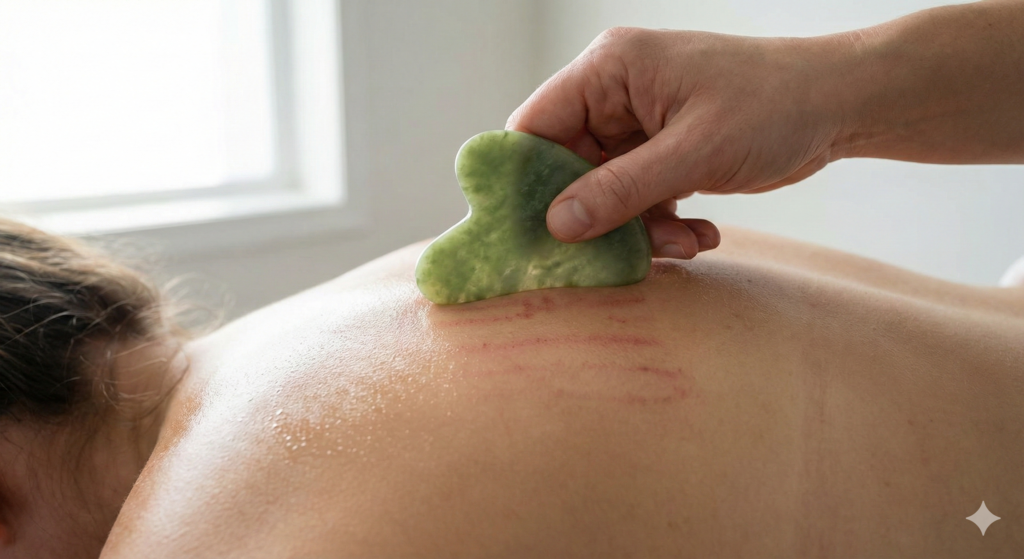
Gua sha (pronounced “gwa-shah”) is a technique where a small, smooth-edged tool is used to gently stroke or scrape areas of your skin to try to improve circulation and promote healing.
Though “scraping” might sound painful, gua sha is a gentle technique. It can be done on the face using very light pressure. Other parts of the body might call for increased intensity, however.
Frequently Asked Questions about Gua Sha
Gua sha has been shown to increase microcirculation in the areas where it’s performed, meaning it helps promote blood flow through your body’s smallest blood vessels. It can also reduce inflammation by helping to trigger the body’s anti-inflammatory response. It’s often used for pain relief: A small study later showed that gua sha may provide longer-lasting relief from chronic lower back pain than heat therapy. It can also improve lymphatic drainage.
Other studies have shown help for the following:
- Perimenopause: A 2017 study found that 15 minutes of gua sha per day could help relieve symptoms like hot flashes, headaches and nervousness
- Breast engorgement: Gua sha could be one type of complementary therapy to bring relief to breastfeeding mothers, a 2023 study showed
- Diabetes-related neuropathy: A 2019 study found that gua sha could help reduce symptoms of this diabetes related complication
- Migraines: In a 2020 study, 50% of participants said they found migraine relief when they used gua sha during episodes of acute pain
Gua sha can cause small reddish-purplish spots to form on your skin. They may look like a rash, but they’re petechiae — tiny spots of bleeding under the skin caused by broken capillaries.
The thinking is that this triggers an anti-inflammatory response, prompting your body to promote healing in that area. This hasn’t been scientifically validated.